NEUROBEHAVIORAL WELLNESS
FOR COMPLEX KIDS
Connecting the clues between how your child feels, functions, and behaves.
You wake up wondering which version of the day you're going to get—whether your child will sleep, eat, cope, make it through school, or unravel over something no one else seems to understand.
I help parents of kids with ADHD and complex symptoms—sensory challenges, emotional dysregulation, anxiety, mood & behavior changes—see how it all connects.
So instead of guessing, you can move forward knowing what's actually driving your child's struggles—and what to do about it.
"Most families land here after trying everything else. Here's how to know if this is the right fit."
You've Found The Right Place If...
✓ Your child has ADHD or ADHD/AUD-like symptoms, but you feel the diagnosis doesn't explain everything.
✓ Sensory issues, anxiety, emotional dysregulation, sleep problems or behavior changes are affecting everyday life.
✓ You've tried multiple strategies but still don't have a clear plan.
✓ Different providers are addressing different pieces, but no one seems to be connecting them.
✓ You're overwhelmed by conflicting information about diets, supplements, labs and treatments.
✓ You want a thoughtful, evidence-informed approach rather than another list of things to try.
Most importantly: you're ready to stop guessing.
"A diagnosis names a symptom. It doesn't explain the whole child. Here's the difference that matters."
We Look Beyond the Diagnosis
A diagnosis can be useful. But it doesn’t always explain why your particular child is struggling, how seemingly unrelated symptoms may be connected, or what deserves attention next.
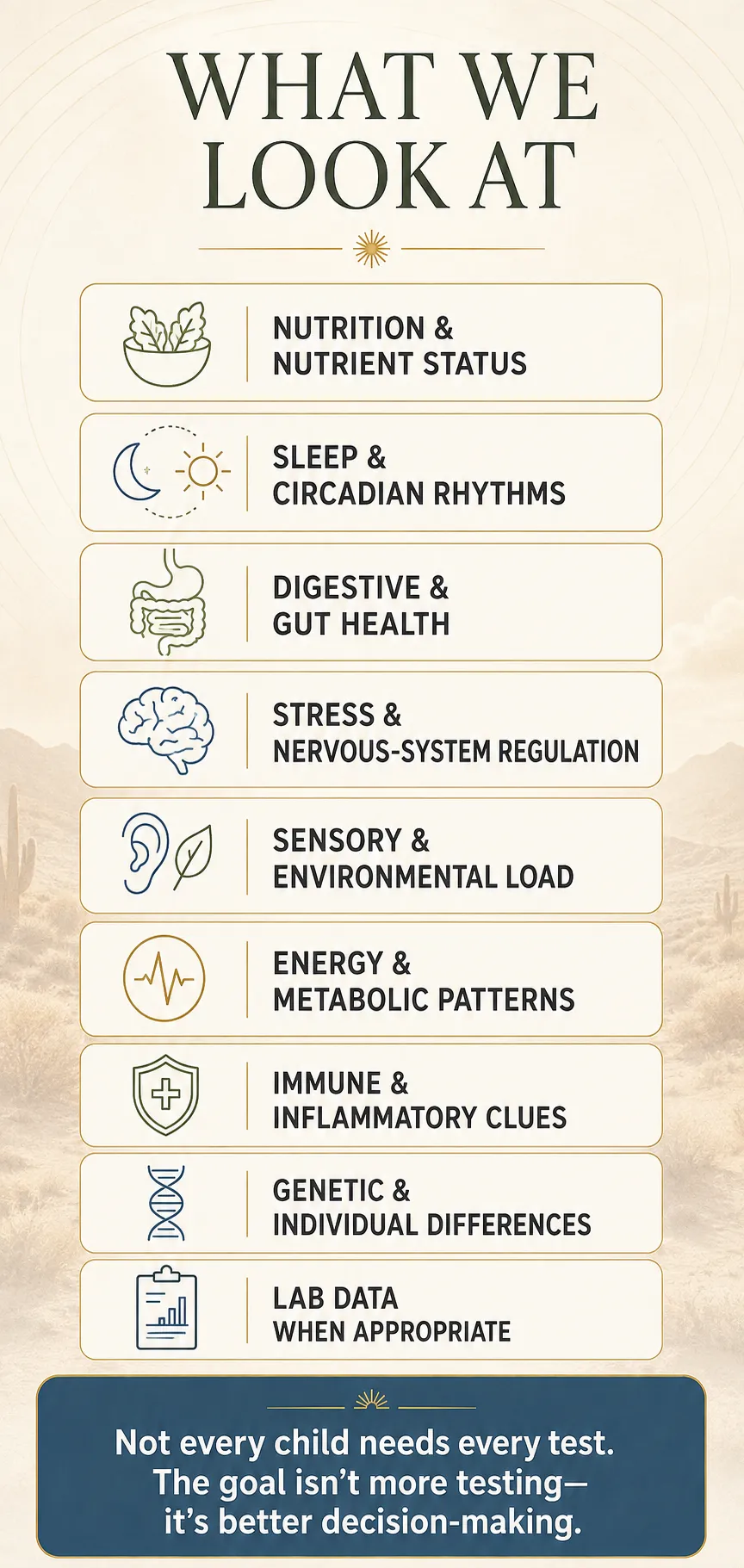
"In practice, that pattern usually shows up in the same six places."
When ADHD/ANXIETY Doesn’t Explain the Whole Picture
Maybe your child already has a diagnosis. Maybe you’re still searching for answers.
Either way, you know there’s more going on—and the symptoms may be more connected than they appear.
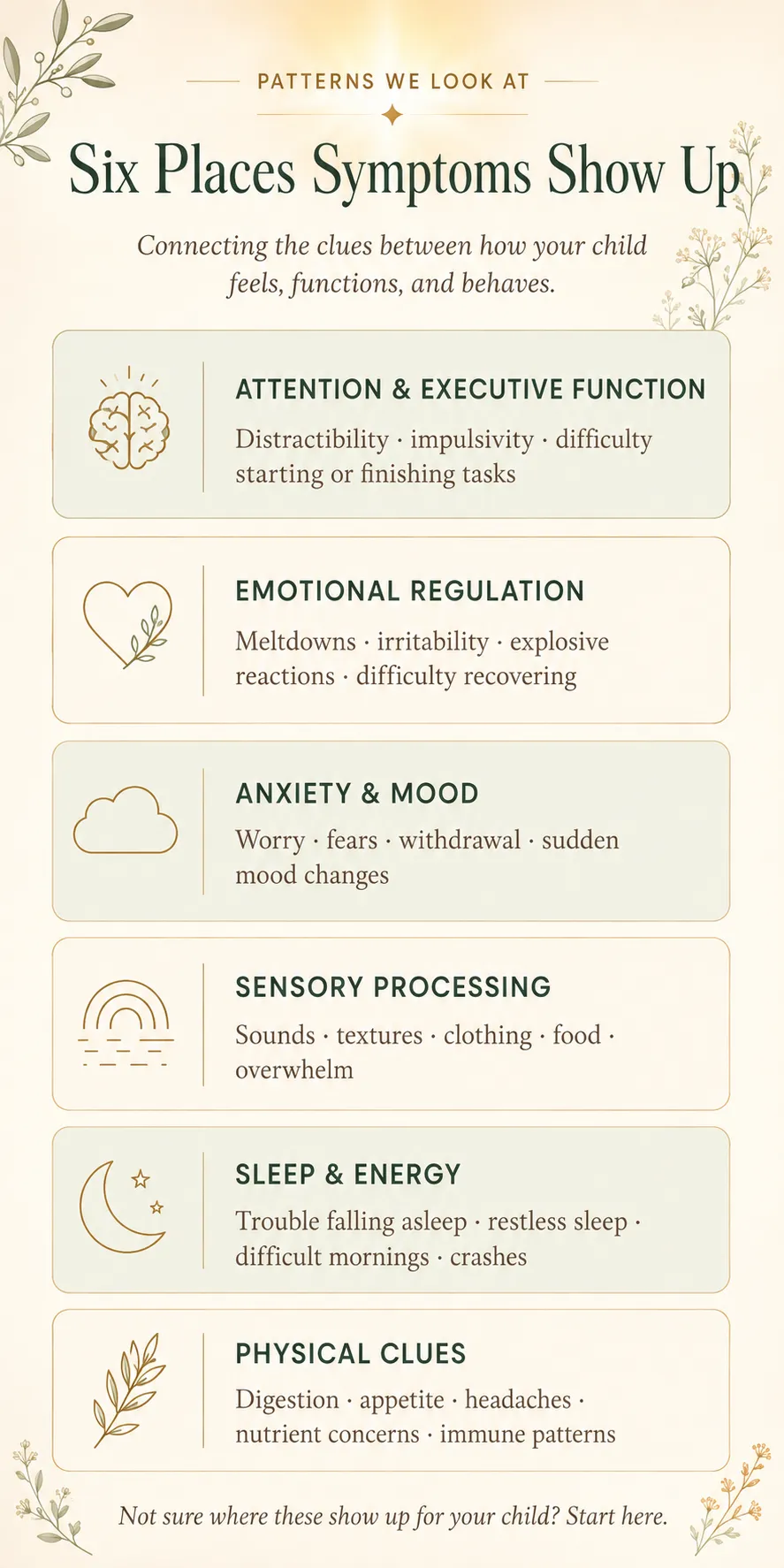
Why You Can Do Everything “Right” and Still Feel Stuck
You’ve tried behavior charts.
Supplements. Diet changes. Therapy.
Parenting strategies.
Maybe medication.
Maybe specialist after specialist.
Some things helped. Some didn't.
And some worked—until they didn't.
The problem may not be that you haven't tried enough.
You may be missing the pattern.
"Seeing that pattern takes a specific kind of training. Here's the background behind this method."

Why Families
Trust Me
Clinical knowledge. Personal experience. Genuine understanding.
Before I was a Functional Wellness Practitioner, I was simply a mom searching for answers.
I know what it feels like to leave another appointment with more questions than hope. I know what it’s like when every specialist sees one piece of the puzzle and no one looks at the whole picture.
That journey didn’t just inspire this practice. It changed how I see healthcare. I built the practice I wish my family had while we were searching for answers.
Today, I combine my background as a Registered Nurse with a systems-based functional approach to help families connect the dots behind complex symptoms, uncover meaningful patterns, and create a clear path forward. My approach is evidence‑informed, using targeted labs and proven nervous‑system rhythms,
Every child deserves to be seen as a whole person. Every parent deserves someone willing to look at the whole picture.
— Danielle Friend, RN, MSN, FDN-P, BC-FHC
"These are the same six patterns from earlier — this is where we find out what's actually driving them."
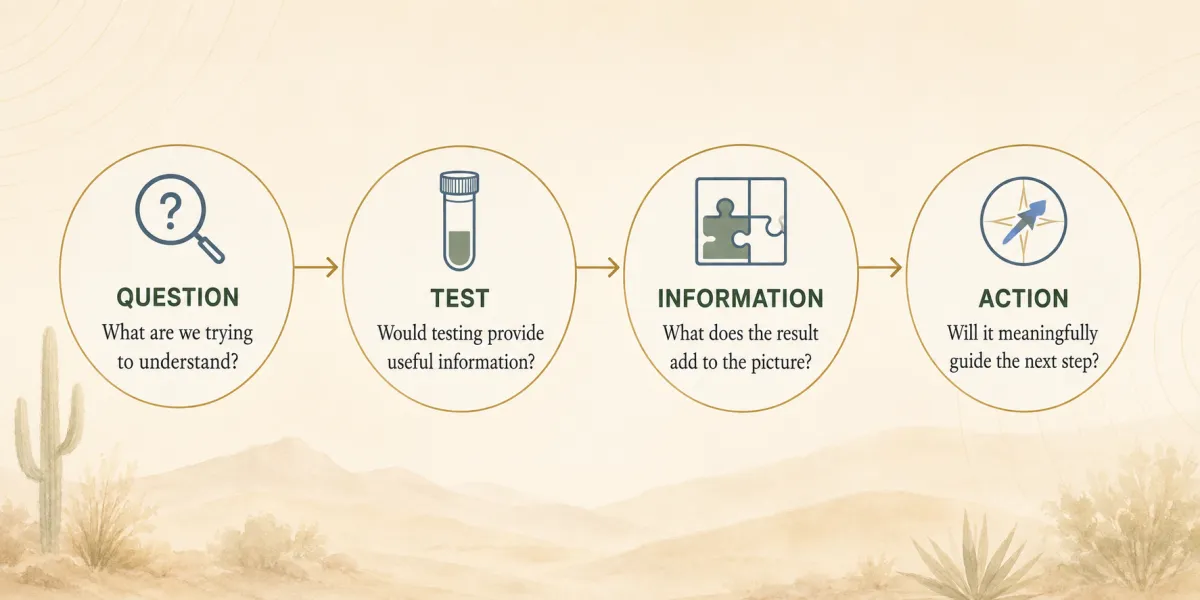
"Once we know what's driving the pattern, the next step is a clear, ordered process — not a guess."
A DIFFERENT WAY TO LOOK AT
COMPLEX KIDS
The Phoenix Method™
Connect the clues. Stop guessing. Build a clear plan.
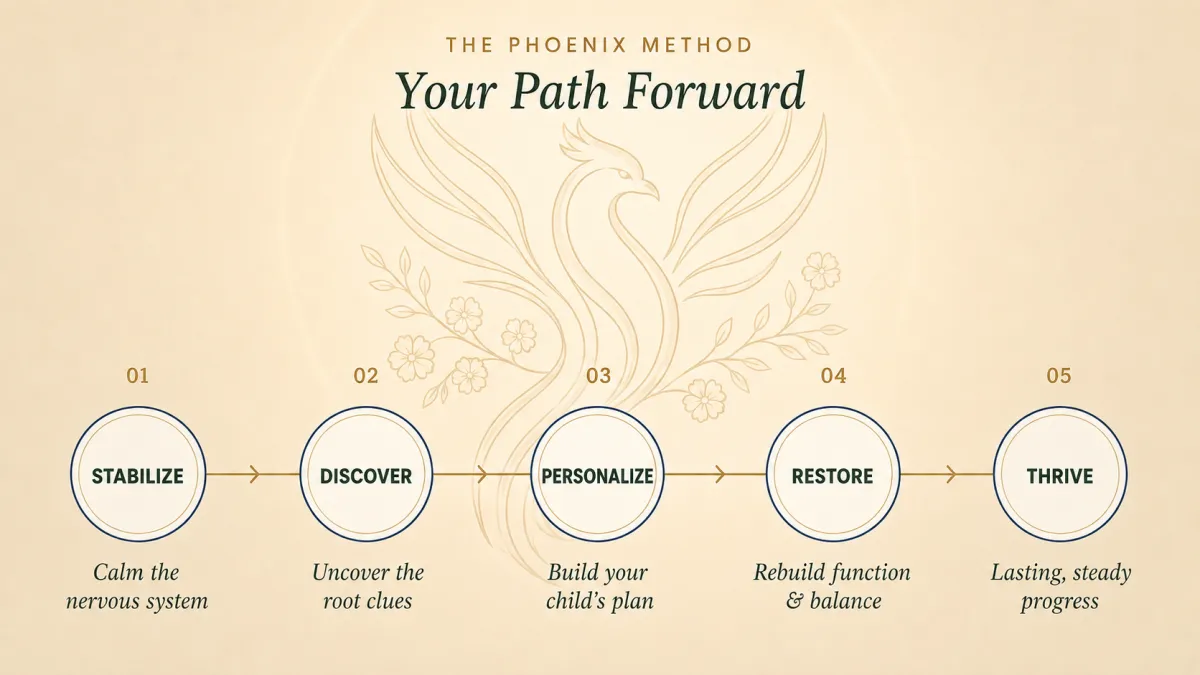
The Phoenix Method™ gives you a structured way to step back from individual symptoms, connect the clues, and see the bigger picture of your child’s health and behavior.
THE FIVE STAGES
1. STABILIZE
Calm the chaos and strengthen the everyday foundations that affect how your child feels, functions, and behaves.
2. UNCO
Connect patterns across your child’s symptoms, history, environment, and previous testing to identify what deserves a closer look.
3. PERSONALIZE
Turn your child’s story—with targeted testing when appropriate—into clear priorities and an individualized plan.
4. RESTORE
Put the plan into action with practical, personalized support designed around your child and family.
5. THRIVE
Build sustainable routines, track meaningful progress, and continue adjusting what your child needs over time.
"Here's what that process produces in practice."
What Progress Can Look Like
Every child’s path is different. These are goals we may work toward—not guaranteed outcomes:
Greater emotional regulation and an easier return to calm
More consistent sleep and steadier daytime energy
Less overwhelm around sensory experiences and everyday routines
Greater comfort with food, digestion, and mealtimes
Increased resilience during stress, transitions, and unexpected changes
Clearer patterns and a better understanding of your child’s needs
More confidence in deciding what to address next
A calmer, more manageable rhythm for the whole family
Progress may look different for every child and can occur gradually. Friend Functional Wellness provides education and wellness coaching; individual results vary, and specific outcomes cannot be guaranteed.
"Every family starts at a different point. Here's where to start yours."
WAYS TO WORK TOGETHER
You Don’t Need to Do Everything at Once.
You just need to know what to do next.
RECOMMENDED STARTING POINT Phoenix Guided Start

Your clear first step.
For families who need a clear place to begin—not another protocol to sort through on their own.
A 60-day foundation designed to organize your child's story, identify meaningful patterns, strengthen foundational support, and create a personalized roadmap for what comes next.
RECOMMENDED STARTING POINT
Phoenix Discovery

When the clues tell us it's time to look deeper.
For families ready to investigate specific patterns that deserve a closer look.
Targeted functional testing and deeper pattern mapping help us gather useful information, connect additional clues, and refine your child's personalized roadmap.
Phoenix Complete

When you need ongoing support putting the pieces together.
For families who want more comprehensive guidance as their child's plan develops.
Ongoing support to implement the roadmap, evaluate progress, adjust priorities, and continue personalizing the approach as your child's needs change.
Not sure where to start?
You don't have to figure that out alone.
NOT READY FOR A PROGRAM? START HERE.
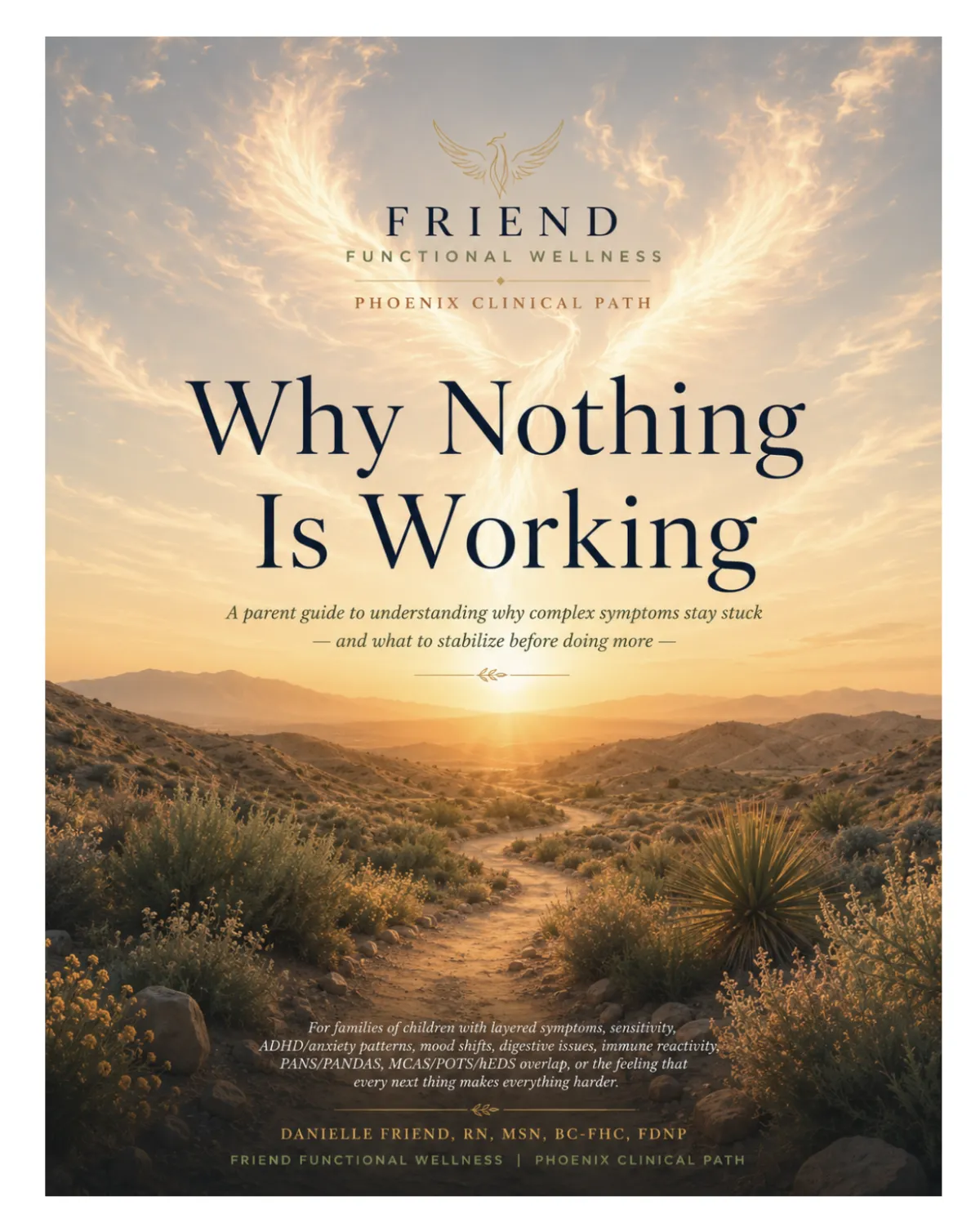
Why Nothing Is Working
If you've tried strategy after strategy and still feel like you're missing something, this free parent guide will help you step back and look at your child's symptoms differently.
Inside you'll learn:
• Why seemingly unrelated symptoms can form patterns
• Why stabilization sometimes needs to happen before deeper investigation
• What information is actually worth tracking
• When additional testing may—or may not—be useful
• How to start building a clearer next step
"Before you decide either way, here are the questions most families ask first."
Frequently Asked Questions
Does my child need an ADHD/AUD diagnosis?
No. You do not need a diagnosis to begin. Some families come with an established diagnosis; others are still trying to understand their child’s attention, behavior, sensory challenges, or other symptoms. We begin with your child’s story and current needs. When symptoms warrant medical or psychological evaluation, I encourage you to connect with the appropriate licensed provider.
Lorem ipsum dolor sit amet, consectetur adipisicing elit. Autem dolore, alias, numquam enim ab voluptate id quam harum ducimus cupiditate similique quisquam et deserunt, recusandae.
Do you diagnose or treat ADHD or other medical conditions?
No. I do not diagnose or treat ADHD or other medical conditions through my wellness coaching practice. My role is to help you connect patterns, strengthen everyday wellness foundations, and establish clear priorities. These services support—but do not replace—your child’s medical, psychological, therapeutic, or educational care.
Lorem ipsum dolor sit amet, consectetur adipisicing elit. Autem dolore, alias, numquam enim ab voluptate id quam harum ducimus cupiditate similique quisquam et deserunt, recusandae.
How is this different from what we've already tried?
Instead of isolated tips, we connect behavior, digestion, sleep, and immune patterns, then build one step‑by‑step plan you can follow
Lorem ipsum dolor sit amet, consectetur adipisicing elit. Autem dolore, alias, numquam enim ab voluptate id quam harum ducimus cupiditate similique quisquam et deserunt, recusandae.
Can you work alongside my child’s existing providers?
Yes. You do not have to choose between wellness support and your child’s existing care. My approach is designed to complement that care. With your permission, I can share relevant observations and coordinate with your child’s providers when appropriate. Medication and medical treatment decisions remain with the prescribing or treating provider.
Will my child need laboratory testing?
Not necessarily. We begin with your child’s history, symptoms, previous results, and current challenges. Testing is considered only when it may provide useful information that could influence the plan. We discuss its purpose, limitations, and costs before you decide. Medical diagnostic testing is handled by the appropriate licensed healthcare provider.
Do you accept insurance?
Most functional care isn’t billable to insurance. Many families use HSA/FSA or submit superbills for potential out‑of‑network reimbursement.
Describe the item or answer the question so that site visitors who are interested get more information. You can emphasize this text with bullets, italics or bold, and add links.
Where should I start?
If you feel overwhelmed or unsure what to prioritize, Phoenix Guided Start™ offers a structured starting point. This 60-day program helps organize your child’s story, identify patterns, strengthen everyday foundations, and clarify what deserves attention next. We begin by discussing whether it is the right fit for your family.
Describe the item or answer the question so that site visitors who are interested get more information. You can emphasize this text with bullets, italics or bold, and add links.

You Don't Need Another List of Things to Try.
You need a clearer way to decide what comes next.
We'll map what's actually going on, prioritize what needs attention first, and build a plan specific to your child
Not sure? Learn more about working together →
Small Shifts, Steadier Days
Simple, evidence‑informed tips for parents of sensitive, complex kids—delivered every other week
Quick wins you can use today. New research made simple. Meals, rhythms, and tools that actually help.
Every other week. No spam. Unsubscribe anytime.
Friend Functional Wellness LLC
Neurobehavioral wellness for complex kids.
Connecting the clues between how a child feels, functions, and behaves.
Danielle Friend, RN, MSN, FDNP,
BC-FHC
[email protected]
1-951-468-5518
36101 Bob Hope Dr. Ste. E5,
Rancho Mirage, CA 92270
View our Privacy Policy and Terms and Conditions here.
© 2026. All Rights Reserved.


